Introduction
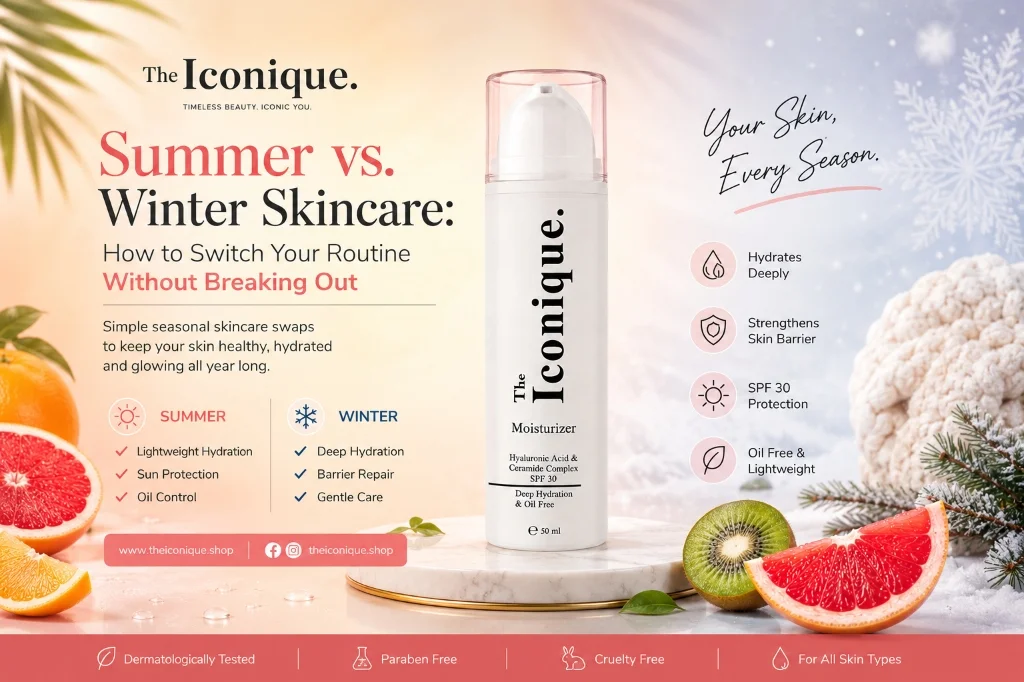
Have you ever noticed that your skin behaves completely differently in summer than it does in winter? During hot months, your face may become oily, shiny, and prone to breakouts. As soon as winter arrives, the same skin can feel dry, tight, flaky, and irritated.
This happens because seasonal changes affect your skin's oil production, hydration levels, and protective barrier. Dermatologists agree that while the foundation of a skincare routine remains the same—cleanser, moisturizer, and sunscreen—the products and textures you use should adapt to the weather. Making small seasonal adjustments can help prevent acne, dehydration, irritation, and premature aging.
In this guide, you'll learn exactly how to transition from a summer skincare routine to a winter skincare routine (and vice versa) without triggering breakouts or damaging your skin barrier.
Why Does Your Skin Change With the Seasons?
Your skin constantly responds to environmental conditions such as temperature, humidity, UV exposure, pollution, and indoor heating.
During Summer:
- Increased heat and humidity: Stimulate excess oil (sebum) production.
- Sweat and buildup: Sweat mixes with environmental dirt, sunscreen, and makeup, leading to clogged pores.
- Higher UV exposure: Increases the risk of sun damage, sunburn, and hyperpigmentation.
- Heavy products: Rich skincare formulations can feel greasy and trigger acne flare-ups.
During Winter:
- Low humidity: Cold outdoor air contains significantly less ambient moisture.
- Indoor heating: Further dries out indoor environments and robs moisture from the skin.
- Trans-Epidermal Water Loss: Water evaporates from the skin more quickly, weakening the lipid barrier.
- Barrier stress: Dryness, redness, flakiness, and stinging sensitivity become much more common.
The key is not to completely overhaul and replace your entire routine, but to make strategic, thoughtful adjustments that support your skin's changing needs.
Summer Skincare Routine
When temperatures rise, your skincare routine should focus on oil control, weightless hydration, and rigorous sun protection.
1. Use a Lightweight Cleanser
Excess sweat, pollutants, and sebum can quickly accumulate throughout warm days. Start your morning and evening with a gentle, non-stripping cleanser that refreshes the pores without leaving your skin tight.
Look for gel cleansers, foaming cleansers, or gentle foaming formulas like The Iconique Face Wash. Avoid abrasive scrubs that can cause micro-tears and trigger irritation in sun-exposed skin.
2. Switch to a Lightweight Moisturizer
One of the biggest skincare mistakes people make is completely skipping moisturizer in the summer. Even oily and acne-prone skin requires deep water hydration. Depriving your skin of moisture causes sebaceous glands to overcompensate by pumping out even more oil.
Choose water-based gel creams, non-comedogenic formulas, or lightweight moisturizers with humectants like Hyaluronic Acid. The Iconique Moisturizer with Hyaluronic Acid & Ceramide Complex delivers oil-free hydration that keeps skin supple without heavy grease.
3. Prioritize Sunscreen
Sunscreen is undeniably the most vital step in any summer skincare regimen. Look for broad-spectrum protection (SPF 30 or higher) with a lightweight, non-greasy finish that layers smoothly under makeup. Reapply every two hours when spending extended time outdoors.
4. Add Antioxidants & Balancing Toners
Adding an antioxidant serum such as Vitamin C along with a refreshing organic toner helps brighten dull skin, protect against UV-induced oxidative stress, and reduce the appearance of sun-induced dark spots.
Winter Skincare Routine
Winter demands a stronger, dedicated focus on deep moisture retention, lipid replenishment, and skin barrier repair.
1. Switch to a Cream-Based or Gentle Cleanser
Strong foaming cleansers that perform well during humid summer months may feel too drying in winter. Instead, opt for hydrating cleansers, cream cleansers, or gentle foaming face washes that cleanse away impurities without stripping vital natural oils.
2. Upgrade Your Moisturizer
Dry winter air accelerates moisture evaporation from the epidermis, leaving skin dehydrated and sensitive. Look for restorative moisturizers packed with:
- Ceramides: To reconstruct and seal the protective skin barrier.
- Hyaluronic Acid & Glycerin: To draw and bind water deep into skin layers.
- Nourishing emollients: To lock in lasting softness throughout chilly days and dry nights.
3. Reduce Over-Exfoliation
Many people attempt to scrub away winter dry flakes by exfoliating more aggressively. Unfortunately, physical scrubbing worsens micro-tears, compromises the barrier, and triggers inflammation. Limit chemical exfoliation to 1–2 times weekly and prioritize restorative hydration first.
4. Continue Using Sunscreen Year-Round
A widespread myth is that sunscreen is only necessary on sunny summer beach days. In reality, UVA rays remain equally potent in winter, penetrating clouds and windows, accelerating skin aging and uneven tone. Daily broad-spectrum SPF remains essential 365 days a year.
How to Transition Between Seasons Without Breaking Out
Many individuals experience sudden breakouts, irritation, or clogged pores when changing seasons simply because they swap all their products at once. Instead, follow these dermatologist-recommended steps:
Step 1: Change One Product at a Time
Replace products gradually over a 1 to 2-week period. Follow this sequence:
- Cleanser: Swap to a lighter or more hydrating cleanser first.
- Moisturizer: Adjust your cream or gel texture next according to humidity levels.
- Targeted Treatments: Adjust active serums and exfoliants last.
This staggered method lets your skin adapt seamlessly and helps you instantly pinpoint any formula that doesn't agree with your skin.
Step 2: Keep Your Core Routine Consistent
Regardless of the season, your staple foundation always consists of: Gentle Cleansing → Hydration & Moisturizing → Sun Protection. While textures and active concentrations adapt to the thermometer, the discipline of daily care remains steady.
Step 3: Listen to Your Skin's Signals
Signs you need richer hydration:
- Post-wash tightness or burning
- Flaking along the cheeks or around the nose
- Redness, itchiness, and sudden sensitivity to basic products
Signs you need lighter textures:
- Excess midday shine and greasy t-zone
- Clogged pores, milia, or small breakout clusters
- A heavy, suffocating sensation after product application
Step 4: Support Your Skin Barrier
A fortified skin barrier is your ultimate defense against both cold-weather eczema/dryness and hot-weather bacterial breakouts. Nourish it with balanced humectants, ceramides, and gentle pH-balanced formulations.
Common Seasonal Skincare Mistakes to Avoid
- Skipping Moisturizer in Summer: Increases oil rebound and leads to stubborn breakouts.
- Using Heavy Winter Creams in Peak Heat: Clogs pores and causes congestion when combined with sweat.
- Stopping Sunscreen in Winter: Exposes skin to year-round UV damage and photoaging.
- Over-Exfoliating Flaky Skin: Destroys the moisture barrier rather than smoothing texture.
- Switching All Skincare at Once: Overwhelms skin tolerance and leads to flare-ups.
Seasonal Skincare Tips for Pakistani Weather
Pakistan's climate presents unique challenges, ranging from blistering 45°C summer heat, high UV indexes, and urban dust to dry, chilling winter winds and smog.
In Pakistani Summers:
- Use lightweight, fast-absorbing moisturizers and non-sticky gel textures.
- Apply SPF 30–50 daily before commuting or sun exposure.
- Double-cleanse gently after exposure to dust, sweat, and urban pollution.
- Stay hydrated and incorporate soothing balancing toners.
In Pakistani Winters:
- Switch to richer ceramide-infused creams like The Iconique Moisturizer.
- Nourish dry hands, feet, and cracked heels with Hand & Feet Cream.
- Nourish dry, brittle winter scalp with Herbal Hair Oil.
- Avoid prolonged scalding hot water showers that strip skin of essential lipids.
Final Thoughts
The secret to radiant, healthy skin throughout the entire year isn't purchasing a completely new skincare cabinet every few months. Rather, it is about understanding how environmental shifts affect your moisture barrier and making intelligent, gradual texture adjustments.
In summer, prioritize breathable hydration, gentle oil balancing, and broad-spectrum sun defense. In winter, focus on barrier repair, lipid protection, and soothing nourishment. By listening to your skin and making deliberate, gradual swaps, you can enjoy a flawless, glowing complexion in every season.
Explore our curated Skincare Collections and discover high-performance essentials formulated for year-round skin vitality.
Frequently Asked Questions
Why does skin change between summer and winter?
Seasonal temperature and humidity changes alter your skin's oil production, hydration levels, and moisture barrier. Summer causes excess sebum and sweat buildup, while winter cold and dry indoor air strip natural oils.
How do I switch skincare routines without breaking out?
Transition gradually by introducing one new product at a time over 1 to 2 weeks, starting with your cleanser, then moisturizer, and finally treatments, while keeping your core routine consistent.
Do I still need sunscreen during winter in Pakistan?
Yes, UV rays penetrate clouds and glass year-round, contributing to premature aging, sun damage, and hyperpigmentation even during colder months.
Should oily skin still use moisturizer during summer?
Yes. Skipping moisturizer triggers the skin to overproduce oil to compensate for dehydration. Opt for a lightweight, oil-free, non-comedogenic hyaluronic acid moisturizer.
How often should I exfoliate dry skin during winter?
Limit exfoliation to 1 to 2 times weekly with gentle chemical exfoliants. Avoid harsh physical scrubs that can compromise an already fragile winter skin barrier.